
Running a small business is not just about offering quality products or services. It is also about reaching the right customers, building trust and creating awareness about your brand.
Today, many people use the internet to search for products, compare services, and make purchasing decisions. Understanding the benefits of digital marketing for small businesses creates a major opportunity to connect with potential customers through digital platforms
Digital marketing helps businesses promote their products and services using channels such as search engines, social media, websites, email and online advertising.
Whether you own a local shop, an online store or a service-based business, digital marketing can help you improve your online presence and support business growth.
Let’s explore its major benefits and how small businesses can use it effectively.
What Is Digital Marketing?
Digital marketing is the promotion of products and services through online channels and digital technologies.
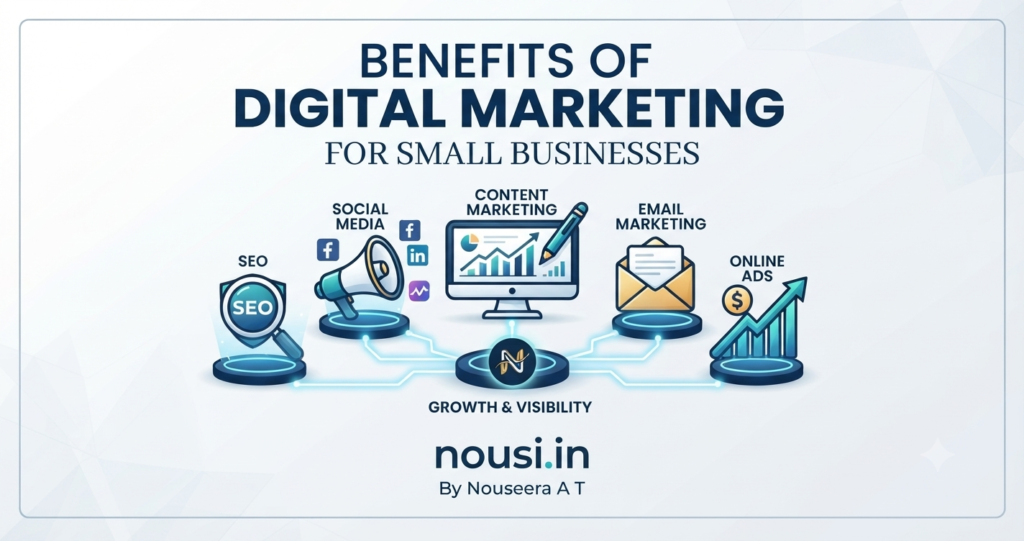
It includes several activities, such as:
Search Engine Optimization (SEO): Improving your website to appear in relevant search engine results.
Social Media Marketing: Promoting your business through platforms such as Instagram and Facebook.
Content Marketing: Creating valuable blogs, videos, images and other content to attract an audience.
Google Ads: Running paid advertisements on Google to reach potential customers.
Email Marketing: Sending useful updates, offers and information directly to subscribers.
These methods help businesses connect with their target audience and communicate their value online.
Major Benefits of Digital Marketing for Small Businesses
1. Reaches More Potential Customers
Traditional marketing often focuses on a particular geographical area. Digital marketing allows small businesses to reach potential customers beyond their local market.
For example, a handmade jewellery business can use Instagram and an e-commerce website to showcase products to customers across different cities.
How to use it: Identify your target audience and choose the digital platforms they use regularly.
2. Makes Marketing More Cost-Effective
Small businesses often have limited marketing budgets. Traditional advertising, such as newspaper advertisements, banners and printed flyers, can require significant spending.
Digital marketing provides affordable promotional options. Businesses can start with organic social media posts, SEO and email marketing before investing in paid advertising.
How to use it: Start with a realistic budget and focus on marketing activities that match your business goals.
3. Improves Online Visibility
Customers frequently search online before choosing a product or service. If your business does not have a strong online presence, potential customers may find your competitors instead.
SEO helps improve your website’s visibility in relevant search results.
For example, a bakery in Kannur can create website content targeting searches such as “custom cakes in Kannur” to reach people looking for local cake services.
How to use it: Research relevant keywords, publish helpful website content and maintain an easy-to-use, mobile-friendly website.
4. Builds Brand Awareness and Customer Trust
People are more likely to consider businesses they recognize and trust.
Consistently sharing useful content, product information, customer FAQs and business updates helps audiences understand your brand.
Social media platforms also provide opportunities to respond to questions and communicate directly with potential customers.
How to use it: Maintain consistent branding, share authentic content and respond professionally to customer enquiries.
5. Helps Target the Right Audience
Digital advertising platforms such as Google Ads and Meta Ads offer targeting options that help businesses reach specific audiences.
For example, a local clothing store can use location-based advertising to promote a new collection to people in nearby areas.
This helps businesses focus their advertising efforts instead of showing advertisements to an unnecessarily broad audience.
How to use it: Define your target audience, location and campaign objective before launching an advertisement.
6. Makes Marketing Performance Measurable
One important advantage of digital marketing is the ability to track performance.
Tools such as Google Analytics 4 and Google Search Console provide insights into website traffic, search visibility and user behaviour.
Businesses can use this information to understand which marketing activities are performing well and where improvements are needed.
How to use it: Monitor relevant metrics such as website visits, enquiries, leads and conversions.
7. Supports Business Growth
Digital marketing helps small businesses build a consistent online presence and create opportunities to attract new customers.
Combining SEO, content marketing, social media and paid advertising can support different stages of the customer journey.
However, meaningful results usually require consistent effort, regular monitoring and continuous improvement.
How to use it: Create a simple marketing plan, set realistic goals and review your performance regularly.
How Can Small Businesses Get Started with Digital Marketing?
Getting started does not require using every digital marketing channel at once. A focused approach is more practical.
Follow these simple steps:
Set clear business goals: Decide whether you want more website visitors, enquiries, sales or brand awareness.
Understand your target audience: Identify their needs, interests, location and online behaviour.
Build a professional website: Create a website that clearly explains your products or services and provides contact information.
Choose suitable marketing channels: Start with relevant platforms such as Google Search, Instagram or Facebook.
Create valuable content: Share useful information that answers your audience’s questions.
Track and improve: Review your marketing performance and adjust your strategy based on the results.
Starting with a few suitable activities is better than trying to manage every platform without a clear strategy.
Common Digital Marketing Mistakes Small Businesses Should Avoid
Even a good marketing strategy can become ineffective when businesses make avoidable mistakes.
Some common mistakes include:
Trying to target everyone instead of identifying a specific audience.
Posting on social media without a consistent content plan.
Ignoring website SEO and mobile usability.
Spending money on advertisements without clear objectives.
Focusing only on followers and likes instead of meaningful business results.
Failing to track marketing performance.
Avoiding these mistakes can help businesses use their time and marketing budget more effectively.
Conclusion
Digital marketing has become an important part of growing a small business. It offers opportunities to reach potential customers, improve online visibility, build brand awareness and measure marketing performance.
You do not need a large budget or a complicated strategy to begin. Start by understanding your audience, setting clear goals and choosing the right digital marketing channels for your business.
With consistent effort and continuous improvement, digital marketing can help create a stronger online presence and support long-term business growth.
Ready to strengthen your business’s online presence?
Explore my digital marketing services and portfolio to learn more about how I approach digital marketing and website projects.
Want help growing your small business online? Explore our digital marketing services or get in touch today for a free consultation.